
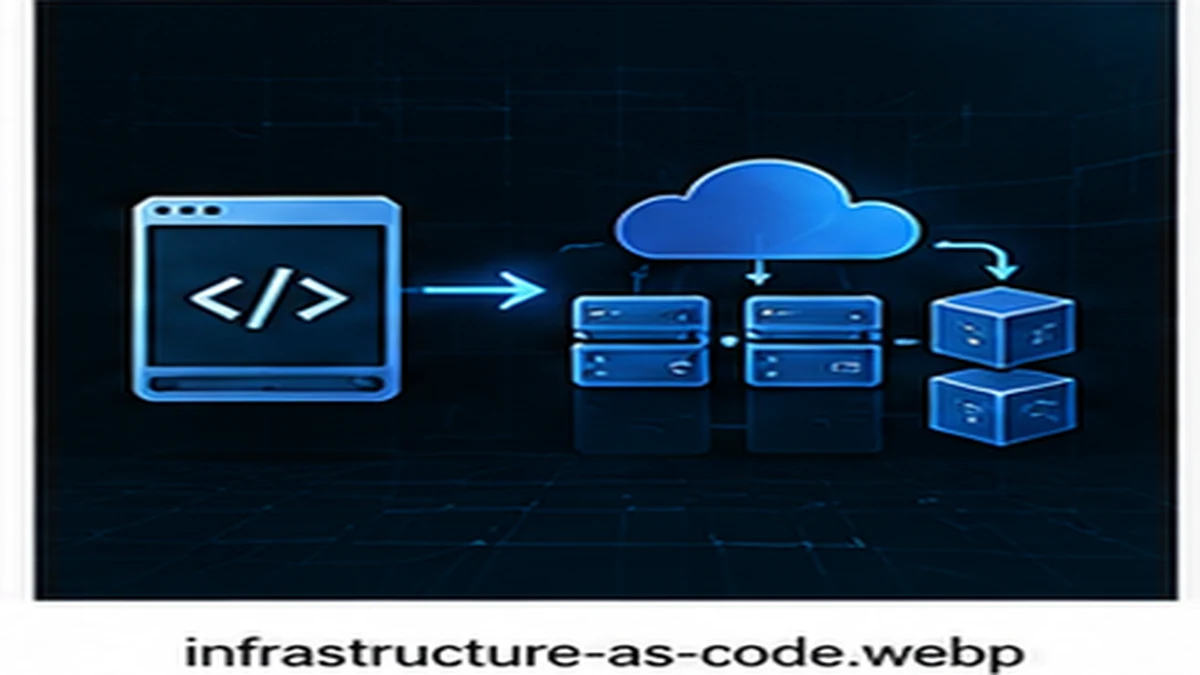
Infrastructure as code (IaC) manages infrastructure through version-controlled configuration files instead of manual setup. IaC enables reproducible deployments, change tracking, and rollbacks. Tool selection affects portability. Native cloud tools create vendor lock-in. Multi-cloud tools add abstraction costs.
Why infrastructure as code
Manual infrastructure management does not scale. Configuration drift accumulates. Documentation becomes outdated. Recovering from failures requires tribal knowledge.
Benefits of IaC
- Reproducibility: Infrastructure can be rebuilt from code
- Version control: Track changes, review diffs, rollback mistakes
- Collaboration: Multiple engineers work on infrastructure safely
- Automation: Deploy infrastructure in CI/CD pipelines
Infrastructure as code tools
IaC tools fall into two categories: cloud-native and multi-cloud.
Cloud-native tools
Cloud-native tools (AWS CloudFormation, Azure Resource Manager, Google Cloud Deployment Manager) provide deep integration with their platforms but lock you into that provider.
Multi-cloud tools
Multi-cloud tools (Terraform, Pulumi) support multiple cloud providers. They reduce lock-in but require maintaining abstraction layers.
Terraform
Terraform is the dominant multi-cloud IaC tool. It uses declarative configuration files and manages state externally.
resource "aws_instance" "web" {
  ami           = "ami-0c55b159cbfafe1f0"
  instance_type = "t3.micro"

  tags = {
    Name = "web-server"
    Environment = "production"
  }
}
State management
IaC tools track infrastructure state to detect changes and plan updates. State management is critical for safe operations.
Remote state storage
Store state remotely (S3, Azure Blob, Terraform Cloud) so teams share a single source of truth. Local state files cause conflicts and drift.
State locking
State locking prevents concurrent modifications. Without locking, simultaneous changes corrupt state.
State encryption
State files contain sensitive data (IP addresses, resource IDs, secrets). Encrypt state at rest and limit access.
Modularity and reuse
Large infrastructure configurations become unmanageable. Modules encapsulate reusable patterns.
Module structure
Modules define inputs, resources, and outputs. Modules are versioned and tested independently.
module "vpc" {
  source  = "terraform-aws-modules/vpc/aws"
  version = "3.14.0"

  name = "production-vpc"
  cidr = "10.0.0.0/16"
  azs  = ["us-east-1a", "us-east-1b"]
}
Testing infrastructure code
Infrastructure changes can break production. Test IaC before applying changes.
Plan review
IaC tools generate plans showing what will change. Review plans in pull requests before merging.
Staging environments
Apply infrastructure changes to staging before production. Verify functionality in a production-like environment.
Automated testing
Tools like Terratest validate infrastructure code by deploying to test accounts and asserting properties.
Avoiding vendor lock-in
Lock-in makes migrating to other providers expensive. Reduce lock-in through abstraction and modularity.
Abstraction layers
Abstract provider-specific resources behind modules. For example, create a "database" module that supports multiple cloud SQL services.
Managed services trade-off
Managed services (Lambda, DynamoDB, Cloud Functions) are convenient but proprietary. Using them increases lock-in. Portable alternatives (Kubernetes, PostgreSQL) increase operational burden.
Pragmatic approach to lock-in
Complete portability is expensive. Accept some lock-in for managed services that provide significant operational value. Abstract where migration is likely.
Drift detection
Manual changes to infrastructure create drift between code and reality. Detect and correct drift regularly.
Automated drift checks
Run IaC plan commands on a schedule. Alert when actual infrastructure differs from code.
Preventing manual changes
Restrict console access for resources managed by IaC. Force changes through code review.
Infrastructure as code is essential
IaC provides reproducibility, version control, and automation. Choose tools that balance portability with integration depth. Test changes, manage state securely, and detect drift. For cloud deployment patterns, see Cloud Readiness.
Published by the DSSS Engineering Team. For corrections or topic requests, use the contact page.